
Think of AI Memory as the intern's notebook.
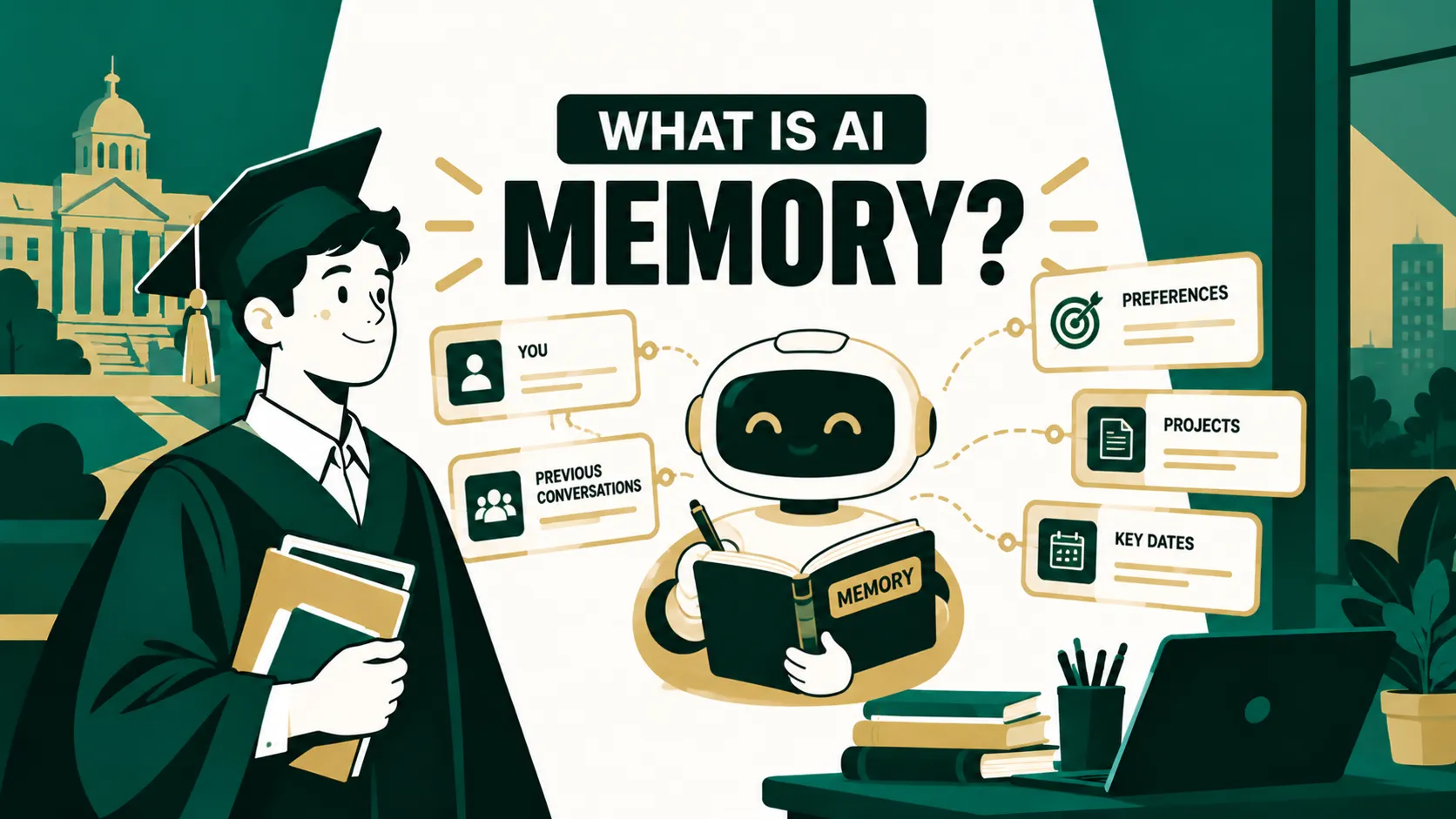
What is AI Memory?
Imagine hiring a new intern.
On their first day, you introduce yourself, explain your responsibilities, and describe your business priorities.
The intern takes notes.
A few weeks later, when you meet again, they remember who you are and what you previously discussed.
You don't need to introduce yourself all over again.
AI Memory works similarly.
It allows an AI system to retain useful information and retrieve it during future interactions.
The University Analogy
Think of the intern keeping a notebook.
Over time, they record important information about their work, previous discussions, and the people they support.
When they meet you again, they can refer to those notes.
AI Memory serves a similar purpose.
Importantly, this doesn't necessarily mean the underlying AI model has permanently learned something new.
A Business Example: Working with a Regional Sales Director
Imagine you're a regional sales director responsible for Southeast Asia.
Without memory: Every time you begin a new conversation, you may need to explain which countries you manage, what your responsibilities are, and which business priorities matter.
With memory: An appropriately configured AI assistant can retain relevant information from previous conversations.
When you return, it can use that information to provide more relevant responses without requiring you to repeat everything.
Memory must be enabled and managed appropriately, particularly when dealing with sensitive business information.
The Key Takeaway
AI Memory provides continuity. It helps an AI system remember relevant information from previous interactions rather than starting from scratch every time.