
In the rapidly evolving tech landscape, scalability is crucial for any organization aiming for sustainable growth. At the recent Stacked Conference 2024, Suthen Thomas Paradatheth, CTO of Grab, shared insights on how Grab leverages platforms to enhance engineering efficiency, drive innovation, and solve complex scalability challenges across Southeast Asia.
The Journey of Grab: From Taxi Hailing to Super App
Grab’s journey began in 2012 as a taxi-hailing service in Malaysia. Today, it operates as Southeast Asia’s leading super app, spanning eight countries and over 700 cities. This evolution saw Grab expanding from ride-hailing into food delivery, parcel services, financial services, and even digital banking.
With 3.5 billion transactions annually and 40.9 million active users monthly, Grab has achieved impressive scale. However, operating in such a diverse region presents unique challenges. Each country has distinct languages, cultures, and regulatory environments, requiring Grab to take a hyper-local approach and focus on affordability and efficiency.
Why Platforms?
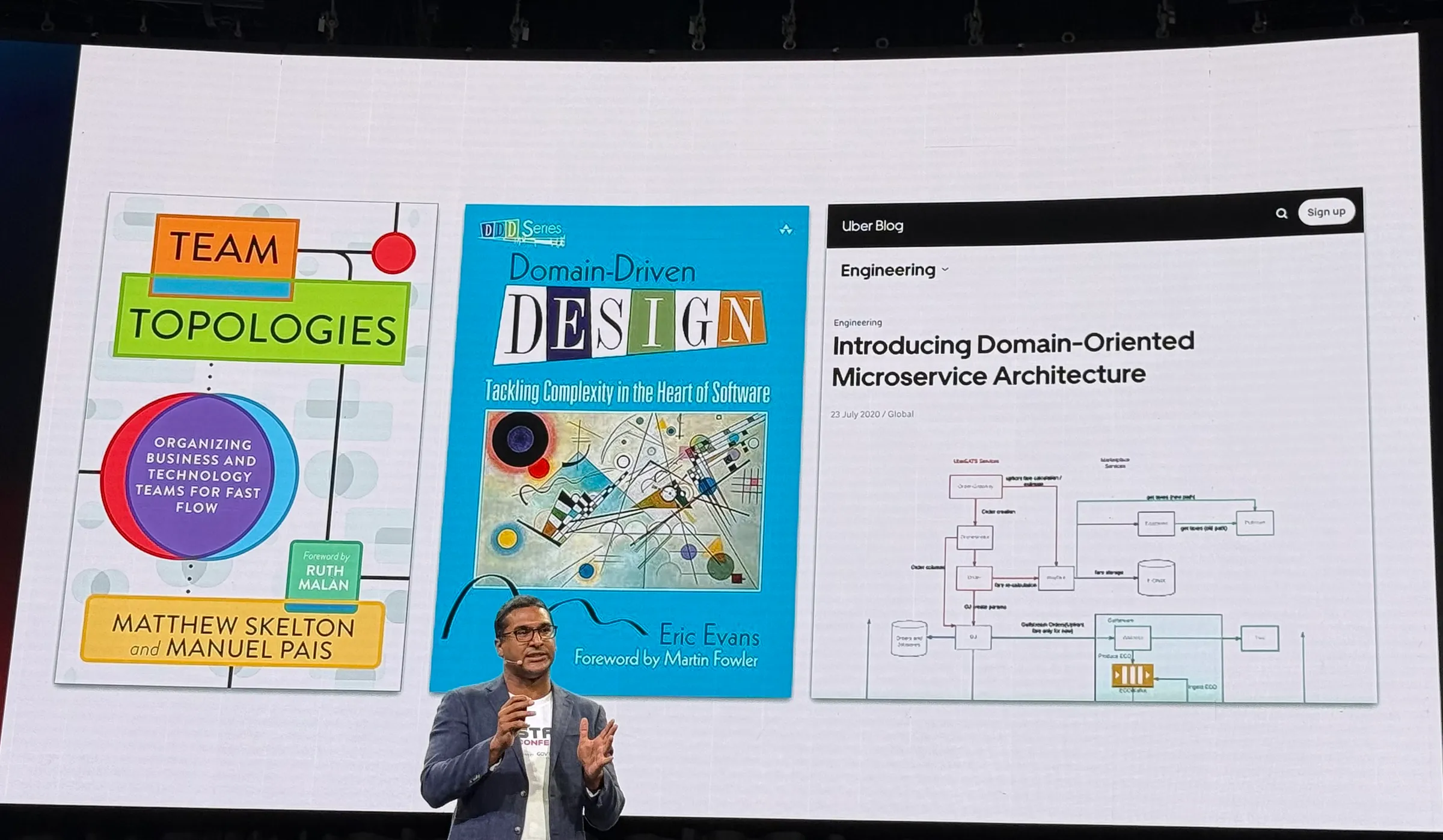
Platforms are the backbone of Grab’s strategy for sustainable growth. They help improve user experience, enhance developer efficiency, and enable scalable operations. Drawing inspiration from Team Topologies and domain-driven design, Suthen emphasized that platforms eliminate duplicated work and streamline processes, allowing developers to focus on creating high-impact solutions.
Key benefits of platforms at Grab include:
- Enhanced User Experience: A unified platform ensures a consistent user interface, eliminating the fragmented experience of interacting with multiple “mini-apps.”
- Developer Velocity: Platforms provide standardized tools, preventing developers from reinventing the wheel and empowering them to build unique features faster.
- Scalability: Centralized handling of critical services, like authentication, allows Grab to scale quickly while maintaining efficiency.
The Three-Layer Platform Architecture
Grab’s platform approach is divided into three layers:
- Business Vertical Tech Families: These teams manage customer-facing products, directly impacting revenue and customer experience.
- Product Platforms: Reusable components for verticals, enabling teams to focus on unique challenges without duplicating work.
- Technology Infrastructure Platform: The foundation for efficient deployment, governance, and compliance management.
An example of this infrastructure is “Conveyor,” Grab’s deployment tool, which handles around 17,000 monthly deployments, accelerating time-to-market and reducing manual deployment processes.
The Fulfillment Platform: Solving for Driver Efficiency
One standout product platform is the Fulfillment Tech Family. This platform consolidates tasks like ride-hailing, food delivery, and parcel delivery, optimizing drivers’ earning potential and ensuring global efficiency across services. Previously, different verticals handled driver interactions independently, leading to inefficiencies. Now, the Fulfillment platform provides:
- Supply Shaping: Ensuring the right number of drivers are available when demand peaks.
- Pricing and Dispatch: Assigning tasks and setting prices to balance supply and demand.
- Fleet Management: Streamlining the entire driver lifecycle, from registration to interaction with various services.
Challenges and Insights
Building platforms isn’t without challenges. Suthen shared some key lessons from Grab’s journey:
- Defining Boundaries: Platforms should manage resources that are universally shared across verticals, reducing redundant work.
- Addressing Socio-technical Issues: Shifting to a platform model led some teams to feel a loss of control. Grab addressed this by retaining some autonomy for verticals while consolidating redundant functions.
- Dependency Management: Inspired by Team Topologies, Grab created three interaction modes for handling dependencies: funding platform teams, collaborative development, and asynchronous consumption via APIs.
Conclusion
Grab’s journey shows how investing in platforms can drive engineering efficiency and scalability. While challenging, this approach has empowered Grab to create robust, sustainable systems that support growth across Southeast Asia’s diverse markets.
As Suthen emphasized, building platforms is an ongoing journey. But with careful planning and the right organizational structure, platforms can be a powerful tool for any tech organization looking to scale efficiently.