
The modern tech landscape demands speed, innovation, and simplicity all at once. How can teams build complex software that’s easy to manage and endlessly scalable? That’s where platforms come in, as discussed at the recent 2024 Stacked Conference, where architect Gregor Hohpe took us on a journey through the power and potential of developer platforms. Here’s a look at the key insights from his talk, Platforms: Perfectly Portable Productivity Propellants.
Why Platforms?
In software, platforms are meant to make life easier. They provide a solid base where common functionalities — like networking, data handling, and logging — are managed for you. Developers can focus on creating the unique features and experiences of their applications without reinventing the wheel. Platforms are the invisible force powering innovation by reducing what Hohpe called “cognitive load,” or the mental effort of managing every detail yourself. In short, platforms let developers do more by letting them think less about the basics.
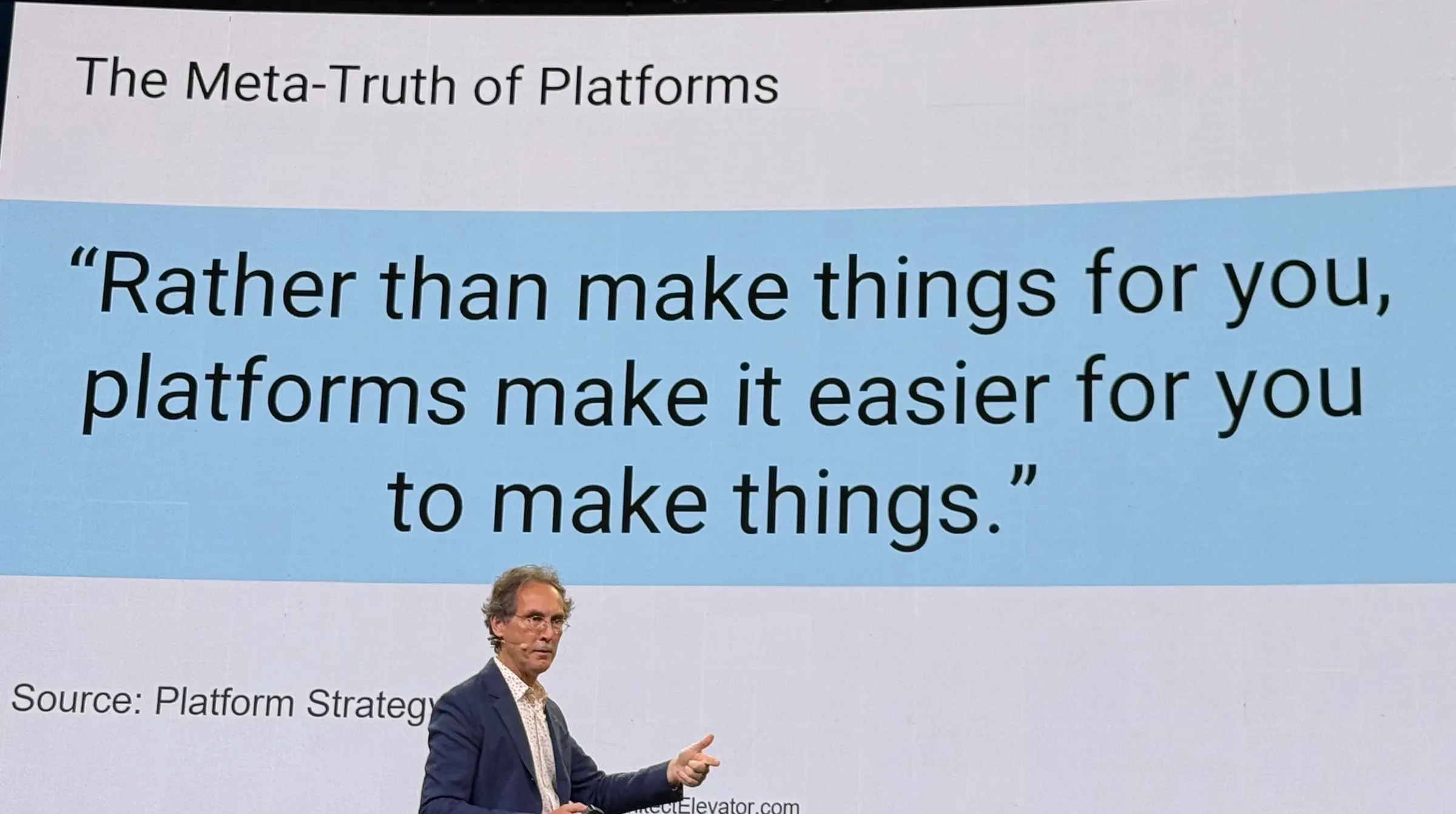
But here’s the twist: a great platform isn’t just about reducing work. It’s a launchpad for surprises. When users take a platform and do something entirely unexpected with it, that’s when it truly shines. A memorable example? A CI/CD pipeline used creatively for data replication — a use case no one had anticipated but one that showed just how adaptable and inspiring a good platform can be.
The Platform as a Fruit Salad
Platforms are often described as collections of tools, but Hohpe offered a more delicious metaphor: the “fruit salad.” Think of a platform not as a “fruit basket” holding separate tools, but as a “fruit salad” — a blend of elements that work together to create something fresh and usable. With a fruit salad, you get a convenient, cohesive mix, easy to enjoy without any fuss. Likewise, a well-designed platform combines different capabilities into a unified experience, empowering users to do more than they could with separate, isolated tools.
Avoiding the Pitfalls of Platform Design
What happens when platforms try to do too much? The result is like General Motors’ ill-fated Cadillac Cimarron, an overpriced Chevrolet with extra features. People want more than rebranded basics; they want a unique, valuable experience. Platforms that fail often try to anticipate every user need, but this approach limits innovation and feels restrictive.
The best platforms, Hohpe suggested, should give teams just enough structure to innovate while allowing for unexpected applications. Platforms should be built to empower users, not to box them into specific ways of working.
Innovation Through Standardization
One of the paradoxes of platforms is that they drive innovation through standards. By establishing certain ground rules — like common protocols or integration points — platforms provide a stable foundation that still allows teams to be creative. Hohpe called this “innovation through harmonization.” For instance, by standardizing protocols, a platform might restrict some choices but unlocks others, making it easier for teams to work together and build complex systems without constantly adapting.
Naming Matters: Moving Away from Jargon
Building on the importance of accessibility, Hohpe highlighted the power of naming. Platforms that use jargon-heavy names for features are harder to adopt and understand. He offered a real-world example: instead of calling a vehicle control the “gas pedal,” why not call it the “accelerator”? This change captures the function without tying it to a specific technology. Naming things based on purpose rather than technical details makes a platform more intuitive and helps users see what’s possible without needing an engineering degree to decode each term.

Staying Agile in a World of Constant Change
As cloud platforms evolve and new technologies emerge, platform teams must be ready to adapt. Hohpe used the metaphor of “rising ocean levels” to explain how platform teams can navigate when cloud providers add new features or tools. In this scenario, the rising ocean represents improvements from cloud providers, and teams can decide to let their in-house platforms “float” above these new offerings, staying ahead with unique additions.

And what about AI? With Gen AI rapidly advancing, some wonder if platforms are becoming obsolete. Not at all, said Hohpe. AI can automate parts of development, but if a platform is poorly designed, AI will only amplify those flaws. Platforms remain vital for structuring development and ensuring consistency.
The Real Power of Platforms
In the end, the true strength of platforms lies in their ability to multiply productivity. They’re not just tools; they’re the foundation for innovation. Instead of doing the work for developers, platforms remove obstacles, allowing teams to focus on what matters most: delivering value. For anyone building platforms, Hohpe’s message was clear: create an ecosystem where creativity and efficiency work hand in hand. Platforms aren’t about building a “superhighway” with endless rules; they’re about building a smooth, versatile path where innovation can flourish.
As the tech landscape continues to evolve, platforms will remain an essential ingredient in the recipe for agile, efficient development. So, if you’re designing a platform, remember: aim for fruit salad, not fruit basket, and get ready to be surprised by what your users create.