
In today’s fast-evolving tech landscape, optimizing developer productivity is more critical than ever. At STACK Developer Conference 2024, industry leaders came together to discuss the common “gotchas” and hurdles that organizations face in their journey to improve developer and engineering productivity. Here are some key insights from this illuminating panel discussion.
The panel brought these challenges to life on stage, grounding the conversation in the practical realities organizations face when trying to improve developer and engineering productivity.
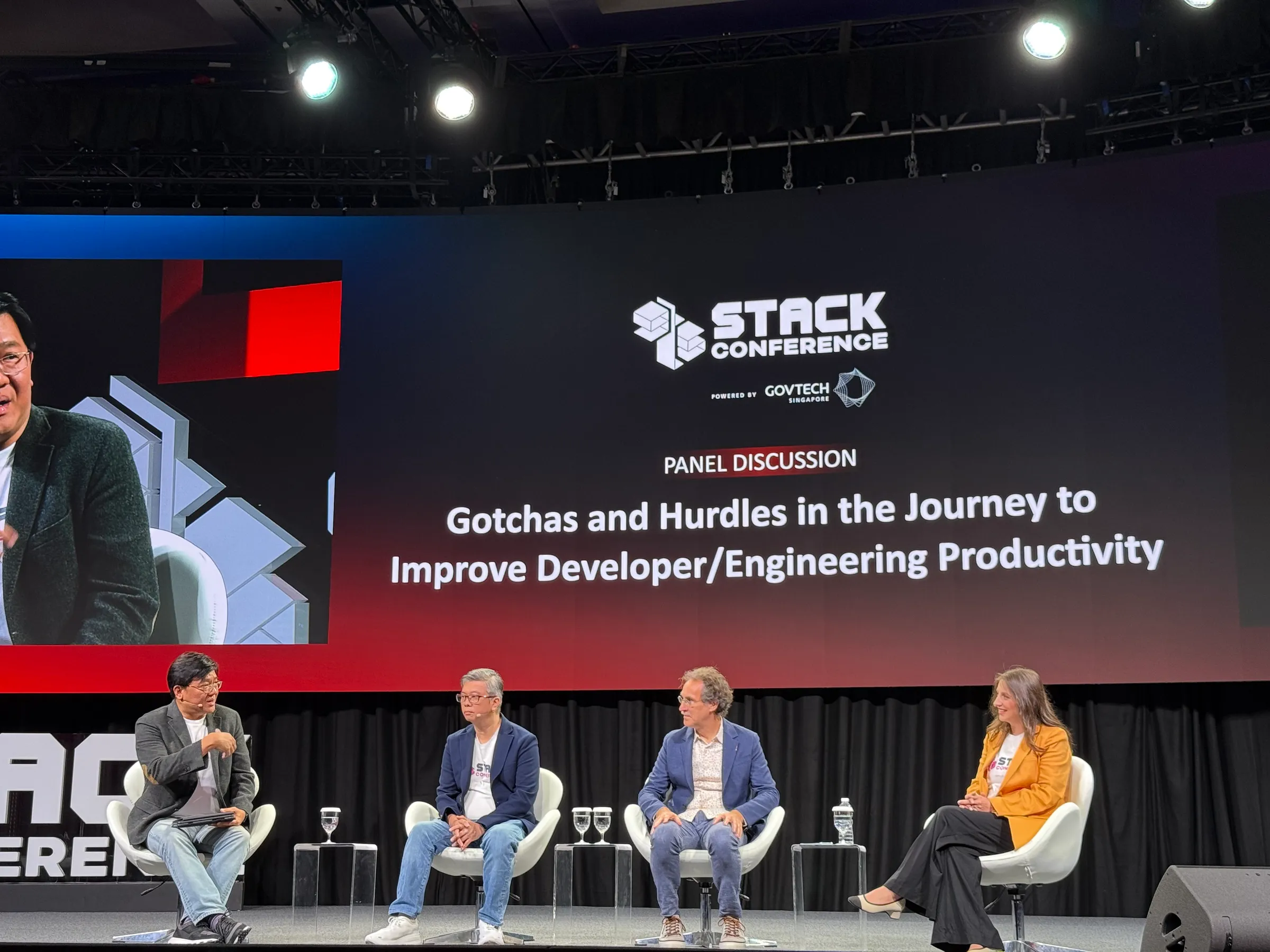
Against this backdrop, the discussion moved from the promise and risks of generative AI to the broader systems, platforms, and ownership models that shape how developers work.
Embracing AI’s Role in Development: A Double-Edged Sword
With the rise of generative AI tools, the potential for boosting developer productivity has become substantial. From automating routine coding tasks to streamlining documentation, AI can transform the way developers work. However, panelists emphasized the need for balance. There’s an inherent risk of technical debt as AI-generated code can sometimes lack the necessary rigor and testing required for high-quality outputs. While AI is certainly here to stay, approaching its role in development with moderation and foresight is essential to maintain code quality and avoid creating long-term problems.
Moreover, AI is not just about code generation; it has the potential to enhance communication within development teams. One of the panelists highlighted that AI could reduce the time spent on team coordination by providing developers, analysts, and other stakeholders with shared context. This could lead to fewer misunderstandings, faster decision-making, and ultimately, a more cohesive development process.
The Importance of Moving Beyond Code
Interestingly, while coding is central to a developer’s role, it only accounts for about 15% of their time. The rest is often spent on communication, aligning requirements, and other essential activities. The panel discussed that improving productivity goes beyond simply accelerating the coding process; it’s also about making the other 85% of a developer’s time more efficient. By integrating tools that aid in project management, collaborative workflows, and code quality assurance, organizations can help developers focus on what they do best—creating innovative solutions.
Platform Thinking: Balancing Simplicity and Flexibility
In discussions around enhancing developer productivity, platforms play an undeniable role. However, building a platform that serves both developers and business needs is challenging. Platforms need to strike a balance between simplicity and flexibility—providing enough capability to be useful but not so much complexity that it becomes overwhelming.
Platforms should emphasize composability rather than just capability. This means focusing on how various platform components can be easily assembled to create meaningful solutions rather than simply adding features. For developers to thrive, they need platforms that support the creation of valuable solutions without bogging them down in unnecessary complexity.
Clarity in Ownership and Alignment Across Teams
One of the recurring themes in the panel was the importance of shared ownership in platform management. Many productivity-focused initiatives struggle because of unclear ownership models. Developers can become frustrated when the responsibilities for a platform or a project are ambiguous. Clear, shared ownership models that delineate both functional and operational responsibilities are essential to keep teams aligned.
Establishing a “customer-centric” mindset for platform teams is also beneficial. Treating developers as customers, gathering feedback, and making iterative improvements to platforms can go a long way toward fostering developer buy-in and enhancing productivity.
Tackling the Challenges of Productivity in Public vs. Private Sectors
The discussion also touched on the differences in productivity dynamics between the public and private sectors. In the private sector, productivity is often driven by revenue, efficiency, and speed to market. The public sector, however, faces additional layers of complexity, from the diversity of services provided to balancing efficiency with broader social responsibilities. This diversity means that creating standardized productivity solutions for government developers can be especially challenging. Building flexible platforms that can support a wide range of applications and services may be the key to bridging this gap.
Conclusion: Shaping the Future of Developer Productivity
As the panel discussion at Stack Conference 2024 highlighted, the journey to improve developer productivity is filled with both opportunities and challenges. With the right balance of AI, well-designed platforms, clear ownership, and sector-specific strategies, organizations can unlock new levels of efficiency for their development teams.
The path forward involves continual adaptation and openness to new approaches, but with a clear focus on quality, alignment, and the evolving needs of developers, we can build a productive, sustainable environment for innovation.